Episode 18
Haz Memon The Community Builder
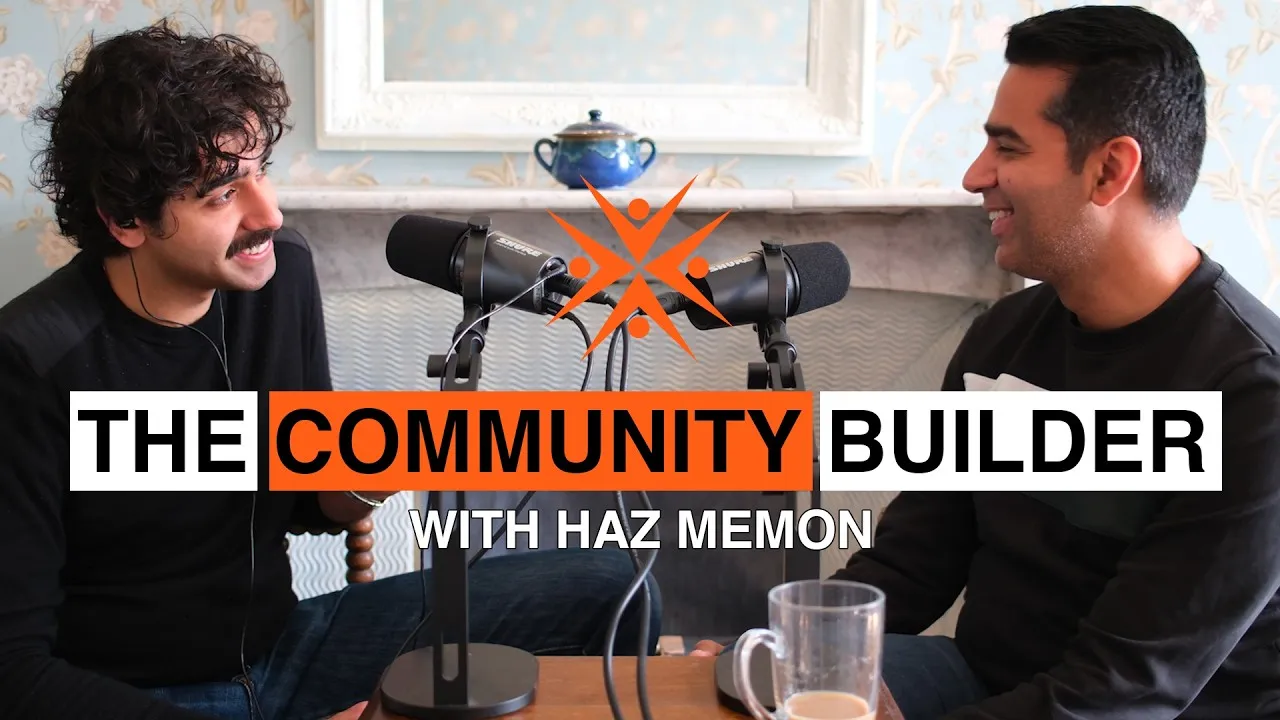
About Haz’s Work
Haz Memon is the founder of Our Escape (https://www.ourescape.co), a destination co-living space designed to bring communities together and create genuine human connections. He’s also the creator of Co-living Hub and architect of co-living certification standards designed to raise the quality and authenticity of co-living spaces worldwide. His philosophy: depth over scale, community over growth, and freedom as a state of mind.
Episode Description
Haz Memon doesn’t believe in scaling. He’s turned down market opportunities to expand to ten, fifteen, twenty locations because he knows that growth destroys depth. Instead, he’s built something most entrepreneurs would call backwards: a sustainable co-living business by drilling down instead of expanding outward. He brings people together. He connects human beings in ways that transform them. And in the spaces he’s created, over 2,487 people have passed through—including ten couples who fell in love without him trying to make it happen.
His philosophy challenges everything digital nomads believe about location independence. Freedom, he says, is not about being able to move whenever you want. It’s a state of mind. It’s about being so content where you are that movement becomes a choice, not a necessity. Which means you can be free in one location if your mind is free. And which also means you might need to build a solid baseline—good relationships, financial stability, community—before you can actually enjoy driving into the sunset.
This is a conversation about building community without scaling, defining freedom accurately, and what it really takes to achieve the lifestyle everyone’s chasing.
Timestamps
- 00:00-00:03 Introduction, greeting
- 00:03-00:20 What's on your mind right now - being at Chateau
- 00:20-00:38 Do you want to retire early?
- 00:38-01:00 What is it that you do - bringing people together
- 01:00-01:41 How many couples have you made - 2,487 people, 10 couples
- 01:41-02:07 Theory about digital nomads and entrepreneurship
- 02:07-03:13 Ibi's parallel theory about co-livings and drilling down
- 03:13-04:03 Tribal thinking, creating depth vs. scaling
- 04:03-05:14 What does freedom mean exactly?
- 05:14-06:09 Do nomads need to be location independent for freedom?
- 06:09-07:02 Co-living isn't just for digital nomads
- 07:02-07:52 Destination vs residential vs hybrid co-livings
- 07:52-08:52 Focus on destination co-living for digital nomads and remote workers
- 08:52-09:59 Real example: London office worker using co-livings for remote work days
- 09:59-10:28 What are you trying to create? A sense of belonging
- 10:28-11:22 Freedom is a state of mind, being yourself without judgment
- 11:22-11:43 Co-living as home, welcoming guests as family
- 11:43-12:28 The importance of coming with open mind and open heart
- 12:28-12:59 Co-living Hub project and certifications
- 12:59-13:47 Co-living mafia question - standardization vs soul
- 13:47-14:48 What certification looks at: infrastructure, accessibility, sustainability, community
- 14:48-15:43 Two years of research with co-living founders, debunking fake co-livings
- 15:43-16:00 [Community-driven solution approach]
- 16:00-17:00 [Letting go and trust lessons]
- 17:00-18:00 [Growth versus contentment philosophy]
- 18:00-19:00 [Opening spaces in Switzerland and Greece]
- 19:00-20:00 [Personal philosophy on location and passion]
- 20:00-21:00 [Living in spaces - three months, then five minutes away]
- 21:00-22:28 Lived near first space for five years, then had to let go
- 22:28-23:39 Opening second location taught him to trust others
- 23:39-24:17 Difference between owning and operating
- 24:17-24:39 Now I choose to visit vs. need to visit
- 24:39-25:54 How to stop yourself from continuing growth
- 25:54-26:25 Reaching contentment, happiness level scale
- 26:25-27:01 Don't worry about stagnation - Co-living Hub, photography, horse riding
- 27:01-27:34 What have you done in the last year?
- 27:34-28:24 Got married, threw party of my dreams, visited breathtaking locations
- 28:24-29:09 Unplanned Greece adventure, driving to island edge, sunset, local feta cheese maker
- 29:09-29:42 Digital nomads chasing romanticization without baseline
- 29:42-30:37 Need baseline of sustainability and freedom before driving into sunset
- 30:37-31:05 Level of contentment, everything figured out to some extent
- 31:05-31:33 If happy and content, everything after is ecstasy, closing remarks
Full transcript
00:00:00:01 - 00:00:38:19
Ibi
Hello and welcome to IV’s Digital Nomad Stories, featuring real conversations with professionals who have cracked the code to sustainable, nomadic lifestyles. These people aren’t beach and Wi-Fi chasers. They’re building competitive advantages that traditional employment could never match. Global mobility, income diversification, and the freedom to capitalize on opportunities anywhere. I’m Ibi Malik, your favorite digital nomad consultant, and today I’m joined on the show by Hayes Memon, someone who has stopped measuring his life and money or milestones and started measuring it in happiness.
00:00:38:21 - 00:01:00:02
Ibi
See, most nomads choose the next location, the next adventure, the next number, but has did something very different. He built two co-living spaces that people fell in love with, and 2500 people have passed through these spaces. Ten couples have been made in these spaces. But then he stopped. No more scaling, no more growth. Because growth wasn’t the point.
00:01:00:03 - 00:01:30:21
Ibi
Happiness was. And now that’s how he keeps score. Not revenue, not followers, not new locations opened, but what level he is at on his own personal happiness scale. And once he is at that level where he’s happy, he doesn’t need more. He doesn’t need more money or more friends. He doesn’t need to chase anything. And so now he’s got 4 or 5 places he calls home, where the bakery owner knows his coffee order and where he’s rooted but free to leave whenever he likes.
00:01:30:23 - 00:01:46:19
Ibi
And this is a masterclass in contentment. When you decide happiness is the only metric that really counts, you kind of stop chasing the sunset and realize you might already be sitting in it. His has high, has.
00:01:46:21 - 00:01:48:07
Haz
High be.
00:01:48:09 - 00:01:50:17
Ibi
What’s on your mind.
00:01:50:19 - 00:02:05:09
Well, right now, being here, being with the people and just leaning into it and taking as much as possible. This morning we talked about retiring early and that was fun.
00:02:05:10 - 00:02:09:12
Ibi
Do you want to retire early? Is this your plan?
00:02:09:14 - 00:02:18:03
I think for me, it would be great to have some sort of passive income, but I don’t see myself ever stopping to work.
00:02:18:05 - 00:02:23:12
Especially when you love what you do. You don’t really work. They say, right.
00:02:23:16 - 00:02:26:13
Ibi
What is it that you do?
00:02:26:15 - 00:02:44:07
I bring communities together, I bring people, I connect human beings in ways that can transform them, can enlighten them, can create professional relationships between them. All of those are.
00:02:44:11 - 00:02:46:00
Ibi
Just professional relationships.
00:02:46:01 - 00:02:48:04
Not just professional. That’s true.
00:02:48:05 - 00:02:52:18
Ibi
That’s true. How many couples have you made? How many couples have you personally been responsible for?
00:02:52:18 - 00:02:54:04
Haz
Has personally.
00:02:54:04 - 00:02:55:13
Ibi
I want to know.
00:02:55:15 - 00:03:14:21
I wouldn’t call it personally. I’ve created the space that they can connect and that has happened. So just within the spaces that I’ve created, we’ve had 2487 people pass by these spaces.
00:03:14:22 - 00:03:21:21
Ibi
I thought you were going to say 2487 couples for a second. I was getting really excited. I was like, oh my God.
00:03:21:21 - 00:03:25:01
This is no factory. No. Okay.
00:03:25:03 - 00:03:26:22
Haz
No, no, it started.
00:03:27:00 - 00:03:29:16
Ibi
And 400 people have passed through. Yeah.
00:03:29:18 - 00:03:48:08
Yeah they have. And out of that, I would say there are ten couples that I know of that are still standing, let’s say, because there have been couples that have not lasted. To love, to love.
00:03:48:10 - 00:03:52:12
Ibi
So I stalked you online. You did? I did, I admit.
00:03:52:13 - 00:03:54:00
Without my permission.
00:03:54:04 - 00:04:04:01
Ibi
Absolutely. Without your permission. Okay, not only did I stalk you online, I took all of your profiles and made a little chatbot off the back of them and then spoke to you.
00:04:04:03 - 00:04:04:17
Wow.
00:04:04:20 - 00:04:05:22
Ibi
Yes.
00:04:06:00 - 00:04:09:09
Good to then. Yeah. What did you find out?
00:04:09:11 - 00:04:40:17
Ibi
Found out that we actually have a lot of similarities, but in a very interesting way. That’s a very interesting parallel. Here’s here’s what I think. Tell me if I’m wrong, because this is all. Could all be made up, right? Yeah. So I have a theory about solopreneurs and entrepreneurship. Okay. That theory is on the basis that a digital nomad is chasing a lifestyle, and they think that if they launch a business and become an entrepreneur, it’ll make it easier for them to achieve that lifestyle.
00:04:40:18 - 00:05:11:15
Ibi
Right. But entrepreneurship is very hard. And actually what they should have just done in the first place is a solo piano type venture where they just did something simple with the right mindset and the right skill set to the right limit to set a comfortable limit and then enjoy the life, inhabit the freedom, inhabit the life. But instead, they kind of run the risk of going down this entrepreneurial path and this big, long journey of like, you know, getting funding and starting new things and finding the next place to go, yada, yada, yada.
00:05:11:17 - 00:05:47:05
Ibi
Now, what I found is a parallel between my thinking on that and your thinking on co-living is that it seems like you have a theory that a co-living should reach a certain point of maturity, whereby it is optimized and therefore does not need to grow further like a typical business does, does not need new funding, does not need new growth opportunities, more beds, you know, 50 beds in a new place or whatever, but rather it needs to drill down and get deeper in order to succeed.
00:05:47:07 - 00:05:48:17
Ibi
What do you think?
00:05:48:19 - 00:06:29:13
I think you’re correct. And in a way, I feel we just go back to thinking like a tribe. Because co-living is very tribunal in that way that you are creating this very special bonds with people. You wanted to get deeper and deeper, but the more you scale, the harder it is to offer that depth to your space and harder to also create a more quality, genuine relationships between spaces where you can actually put effort into.
00:06:29:14 - 00:07:00:05
Now you could create a digital space and be like, hey, that’s a platform that I’m opening up for people to connect, and that could lead to much more freedom of lifestyle and digital nomadism. But you can achieve that freedom to with, not a digital space, but a physical space. And that’s what I’ve done with our spaces.
00:07:00:07 - 00:07:05:11
Ibi
How what does the freedom mean, exactly?
00:07:05:14 - 00:07:29:21
That’s the question, right? Freedom, I think, is a state of mind more than actually being able to move whenever, wherever you want. It’s more about having the sense of like, I can leave when I want to. I can move to a place where I want to, but I can actually be free just where I am.
00:07:29:23 - 00:07:54:05
Ibi
Wow. That’s deep. Okay. And so a nomad in print in definition has the former to be able to move where they want to. Right. And are you using that as a prerequisite in order for them to be free in one location. Like do they have to be location independent in order to reach that depth in the locations that you’re creating?
00:07:54:07 - 00:08:28:17
Not necessarily. Again, because we do have people staying with us who are not just Lomax, they are entrepreneurs with home bases, and they do this couple of weeks, a couple of months, a year, but they don’t travel anywhere else. But for them to actually experience something where they can create meaningful experiences is that freedom is being able to connect with people, like minded people from all around the world.
00:08:28:18 - 00:08:40:05
They don’t have to travel thousands of miles to achieve that. It could be just during neighborhood.
00:08:40:07 - 00:09:00:06
Ibi
I’m sensing that I have an assumption which is being challenged. Okay, my assumption is that co-living spaces are for digital nomads, and it sounds from what you’re saying, that that is not an assumption that you hold.
00:09:00:10 - 00:09:37:11
I don’t. Why? Because core living spaces now have grown into many different forms and many different niche as well. So just just to be clear, co-living spaces now there’s destination co-living spaces, which are for people who can take their work anywhere and work from these spaces and their residential co-living spaces, which are for people moving new into cities and want an easy plug into a community.
00:09:37:11 - 00:10:02:10
And housing is an issue there. So these are expats, students, professionals coming into the city for long term reasons, and they want to be with the community. And that’s residential co-living. Okay, so first, just to be clear, there are these two segments. There are also hybrid callings where you could do short stays and long stays. And what.
00:10:02:11 - 00:10:04:21
Ibi
Do you look at.
00:10:04:23 - 00:10:37:18
Destination livings. That’s where my prime focus is, which is calling for additional nomads, remote workers, entrepreneurs and one who is location independent and can take their work anywhere but digital nomads, as we define, do not have a fixed base. But what I am saying is calling spaces can be for people who do have fixed homes, their homes that go back to.
00:10:37:20 - 00:10:42:16
Interesting, interesting.
00:10:42:18 - 00:11:11:12
Imagine living in London and you are having a night five job that you’re going in day to day. That’s your routine, but the company allows you to work from home whenever you want, a couple of days a week, a couple of days a year. You use that time to be like, hey, I’m gonna take that 20 days that you give me of working from home.
00:11:11:12 - 00:11:44:15
I’m going to use it at a cool living space, but that cool living space could be just two hours from London, you know, and you are exploring that side of how it is to work around people who are not my colleagues, but they are doing things which I enjoy learning about or which I enjoy listening to. So you go to these cool living spaces to form communities, to form connections to, to also learn about yourself and maybe grow professionally too.
00:11:44:20 - 00:11:58:05
So these are people who can still move around, but not all the time. Like just what?
00:11:58:07 - 00:12:13:20
Ibi
So what is it that you’re trying to create for them? You mentioned freedom, but what is it? What is? One of our previous guests said that co-living is a feeling.
00:12:13:22 - 00:12:34:04
Ibi
Yeah. Have you come across this? Yes I have. I was thinking co-living. There a place for digital nomads. You are kind of a ringmaster in the world of co-living. So what is it that you’re trying to create with these spaces?
00:12:34:09 - 00:12:36:10
A sense of belonging.
00:12:36:12 - 00:12:38:18
Oh, I see.
00:12:38:20 - 00:12:41:23
Ibi
Linked to freedom again.
00:12:42:00 - 00:13:11:03
Like I said, freedom is in the mind. And if you are in a space where you feel that you can just be yourself without judgment, without criticism, without anyone having to point out your faults, but instead embracing them and making you a better person that frees you, right? And that’s the freedom I feel the co-living spaces provide. And that’s why I call coal Livings as a home.
00:13:11:03 - 00:13:35:20
It’s a home, and it’s just like going back to your family. You just feel comfortable as soon as you walk in, and that’s the feeling you want to create in your spaces. When you walk in, you feel at home. You feel like you belong there because you’re not a stranger going into a space. You’re just welcomed as a family member.
00:13:35:22 - 00:13:47:17
Ibi
I like it, I like. It sounds like a dream, actually. It sounds like what I experienced a lot of the time. Yeah, yeah, especially in the right coatings, I would say. Yeah.
00:13:47:19 - 00:14:13:13
I think it is difficult to achieve not just as a core living space, but as a person entering that space to come with an open mind and an open heart, to be able to experience that feeling. Because if you truly want to be free, it is you are willing to learn. Embrace all the things that coloring has to offer.
00:14:13:13 - 00:14:39:03
If you are coming in as like, that’s my thoughts. That’s how we do things and that’s how I am. It might be more difficult and more challenging experience for you versus when you’re like, I’m here to learn. I’m here to connect. I’m here to change who I am, and I’m open to that and that. That way you get the best of the core living experience.
00:14:39:05 - 00:14:43:16
Ibi
Now you’ve got co-living hub, right? Yes. It’s your project.
00:14:43:17 - 00:14:44:07
Yes.
00:14:44:08 - 00:15:11:12
Ibi
And I’ve heard of some certifications that you guys to kind of more formalize the industry. You’d have a hotel or whatever hostel kind of industry they’ve there formalized in some way. Do you feel like you’re running some kind of like co-living mafia where you’re like, you know, everybody has to like follow the rules or how are you going to create, how is standardization going to create the magic and the depth and the freedom that you’re looking at?
00:15:11:14 - 00:15:32:08
The standardization is nothing to do with the sole of what a calling is. It is to create some sort of ground rules of, hey, I can call myself a co-living, do I have four bedrooms? And I welcome guest into that. Is that a cool living?
00:15:32:10 - 00:15:34:10
Ibi
Yeah.
00:15:34:12 - 00:16:02:18
No. Again, the thing is we look at the certification, we look at not just the infrastructure with the number of rooms and how it’s designed, how many communal spaces you have and, and where can guests interact. We also look at like things like accessibility, proximity to how you reach these spaces. You we look at sustainability. Are you focusing on making the world a better place?
00:16:02:20 - 00:16:34:02
We look at community. And when I say community, we look at are you hosting community events and community meals, and how are you giving back to these guests? Do these guests actually interact with each other or are they just neighbors in a building? Right. And the certification again, the aim here is to kind of debunk the spaces which call themselves co-living, but could really be just service departments.
00:16:34:04 - 00:17:06:14
Right? And this need did not come from me. It was two years of research with co-living founders who said, that’s our biggest challenge, is there are more and more spaces or residential homes that are calling themselves co-living, and that is kind of tainting what the word means to digital nomads, remote workers, entrepreneurs. So how do we stand out?
00:17:06:16 - 00:17:29:02
And so this was a brainstorming session that we did with the core living founders, and they came up with the idea of co-living certification. Again, the way I try to derive into a solution is through the community. The community wants it and we.
00:17:29:02 - 00:17:29:10
Give the.
00:17:29:10 - 00:17:30:19
Ibi
People what they want. First rule.
00:17:30:20 - 00:17:32:00
Of business.
00:17:32:01 - 00:17:41:03
Give the people what they want.
00:17:41:05 - 00:17:43:14
Okay, let’s.
00:17:43:16 - 00:18:26:23
Ibi
Let’s step back a bit from where Co Living’s let’s talk about has. Yes one of the key themes of this podcast is perspective. Okay I want to I want to see the incredible perspectives that people have developed, seen, witnessed, experienced, lived through their travels, through their nomad life, through their work. And I often talk about perspective from a digital nomads point of view.
00:18:27:00 - 00:18:30:08
Ibi
Are you a digital nomad?
00:18:30:10 - 00:18:43:14
I am, but I would say I am much I’m in a different phase of digital nomad. I did write an article on the phases of Digital Nomad.
00:18:43:15 - 00:18:44:21
Ibi
On medium.
00:18:44:23 - 00:18:49:07
Yeah, I know, there you go. I stalked you.
00:18:49:09 - 00:19:21:00
Yeah. So? So, you know, and and I am in the sloth phase of the digital nomad. So I do like to spend a longer time in one space or one destination, let’s say, just because I prefer integrating into the culture as much as possible, rather than hopping quickly from one place to another. So now that I’ve formed destinations which I like going back to because they’re familiar, I know the person who’s at the bakery.
00:19:21:00 - 00:19:34:12
He or she knows what coffee I like, what bread I like, I know the local gym. I know the person who is training there. I like that familiarity, you know.
00:19:34:13 - 00:19:36:17
Ibi
And you have it with multiple places, right?
00:19:36:18 - 00:19:39:00
Yes. How many?
00:19:39:01 - 00:20:10:06
So I would say maybe 4 to 5 locations is where I feel very familiar. However, again, as it’s been ten years now that I have been a digital nomad, moved around lots of countries, then I’ve reduced that to two destinations primarily, and I do keep a few months a year open to still discovering because I do enjoy discovery.
00:20:10:08 - 00:20:30:13
Ibi
So there’s a lot of people in the world that have one place as home, one place is their base, and then they travel the rest. What do you think having 4 to 5 places that you said, what does that giving you?
00:20:30:15 - 00:21:17:20
That’s giving me diversity, that’s giving me that I could be constrained to one place, but then that’s also constraining myself from one way of thinking, one way of culture, you know, whereas expanding and diversifying that sort of familiarity between different spaces and different destinations, is allowing me to challenge myself in terms of what sort of cultures I can get along with, what sort of places that feel still feel home to me that when I get into that country or city or town that I feel like, hey, I just know this place in the back of my head, you know?
00:21:17:21 - 00:21:21:22
And it just feels nice to have that feeling.
00:21:22:00 - 00:21:27:10
Ibi
What I really want to talk about is how.
00:21:27:12 - 00:21:49:19
Ibi
You live the life that you built for yourself, and you don’t just build it, and you don’t just keep building co-living, and you don’t just keep building new things and building communities and building more homes and taking those 4 or 5 and making them into ten. But how do you live in those places?
00:21:49:21 - 00:22:27:00
Yeah, no, that’s a good question. I never had the ambition to be a millionaire. Building code, living spaces, scaling coding spaces to ten, 15, 20 locations. Because my goal was always that I can reach some sort of state of mind where I feel I’m free to do what I want, where I want, and how I want. And these spaces that I’ve built again has been incredible experience for me.
00:22:27:00 - 00:22:48:05
But I’ve also feel rewarded by seeing the people who go through these spaces, how they feel rewarded. So for me, it’s like in order for me to keep that a sense of what co-living is, I need to keep it small and I want to keep it small, but I don’t want to reach a certain financial threshold to be like, okay, now is a good time.
00:22:48:05 - 00:23:04:02
That is the next goal, next ambition. I always like doing things which I enjoy. I did not open a cool living space in Switzerland or in Greece because it’s an amazing market to open co-living spaces in. It was because I love.
00:23:04:02 - 00:23:04:22
Those places.
00:23:04:22 - 00:23:22:07
I love to live in those places myself. So it comes from a desire within that. I’m passionate about these locations and that’s why I created those coloring spaces.
00:23:22:09 - 00:23:32:08
Ibi
But then how do you live in them? Like.
00:23:32:10 - 00:23:33:16
Ibi
Do you live in them?
00:23:33:16 - 00:23:37:18
I don’t anymore.
00:23:37:20 - 00:23:41:16
Ibi
How long did you.
00:23:41:18 - 00:23:43:10
Three months.
00:23:43:12 - 00:23:45:00
That’s another.
00:23:45:01 - 00:24:13:17
Three months, right? In the beginning. And then I lived five minutes away from the co living space. So for example here it would be the next building. That’s how I, how close that would be. And that I did for five years. And then after five years is when I opened a new location. And that was a good challenge for me to understand.
00:24:13:18 - 00:24:41:01
I can’t be in two places at once. So I do need to let go. I do need to trust people and let someone else be the face of the calling that I’ve built, and not just me. And that was a very good learning for me, that people are not coming to the co-living spaces because of me, but they’re coming to the core living spaces because of what this space offers.
00:24:41:02 - 00:24:54:06
The community that it offers now just has is there. So I’m going there, as is there. So I’m going there. And that kind of was a big weight off my shoulders.
00:24:54:08 - 00:24:58:08
Ibi
So it’s kind of like the it’s kind of like in business that.
00:24:58:08 - 00:25:00:10
The.
00:25:00:12 - 00:25:24:15
Ibi
The splitting between ownership and control, like the CEO is not the shareholder or the chief shareholder, the shareholders, a separate party. The board is a separate party to to central management team is what you’re saying that you’ve kind of split yourself away from it? That you are viola. But not the face, not the operator.
00:25:24:16 - 00:25:42:14
Yes, yes and no. Because I still like to go to these spaces. It’s not like I’m completely disconnected. But there’s a difference between I choose to go into the spaces versus I need to go into these spaces.
00:25:42:16 - 00:25:44:12
Ibi
And so right now you’re choosing.
00:25:44:12 - 00:26:03:00
Right now I’m choosing. So I know when there’s an exciting event that’s happening at the core living space that’s planned for the week. Like, I want to be there because I want to learn about this, or I know there’s an amazing group of people who are having an amazing time, and I want to meet these amazing people as well.
00:26:03:00 - 00:26:24:10
So I, I go in for a couple of days. So it’s again choosing versus I need to be there because I need to run this community. I need to be there because I need to plan events. I need to be there because I need to manage the property and things that are breaking down. I don’t need to anymore.
00:26:24:12 - 00:26:58:08
Ibi
How do you stop yourself from going further into into the optimization, into the growth of the community, into the making more money? I mean, money is one thing. Let’s put money to the side. Sure. But how how do you how do you stop yourself from continuing down a path and just stand and enjoy in one vertical?
00:26:58:10 - 00:27:39:19
I think I have reached a place where I feel content with everything that I’ve achieved, and that state of mind for me is makes me feel happy. And I am on the happy state. Most of the day is most of the time I am on that happy state, and that is because of these sort of, I wouldn’t call it optimization, but the things that I have let go of and be, I’ve been like, okay, someone else can take care of these things just as well as I could.
00:27:39:21 - 00:27:40:17
Interesting.
00:27:40:17 - 00:28:11:03
And reaching that sort of happiness level. And I think that’s how I measure life as well. It’s like what happiness level scale I’m at. And if I am at a certain level, I don’t need to grow. I don’t need more money. I don’t need more friends. I don’t need more experiences. It could be many things that I could be like I do not need because I am where I am and I’m happy.
00:28:11:04 - 00:28:13:22
Ibi
Do you not worry you’re going to stagnate.
00:28:14:00 - 00:28:15:16
Where am I going to stagnate?
00:28:15:17 - 00:28:18:16
Ibi
Do you worry that you’re going to stagnate?
00:28:18:18 - 00:28:46:15
I do not, because for me it’s very much a feeling of like, okay, I’m feeling the urge to discover something new and I can do that tomorrow still, because I’ve achieved everything before that I can still, if I have the feeling of stagnation, just go for something else. Just try something new. And I’m not saying I’m doing co-living and that’s it.
00:28:46:16 - 00:29:12:01
You know, I have co-living hub, for example, where I get to educate but also learn, experiment different things in the co-living world. And I could be doing photography, for example. I could be going horse riding, I could be still doing many other things that I enjoy doing or want to experience, and that’s how I don’t stagnate.
00:29:12:03 - 00:29:19:14
Ibi
What have you done in the last year?
00:29:19:16 - 00:29:26:19
I have gotten married.
00:29:26:21 - 00:29:39:05
I have thrown a party of my dreams, and I have visited locations that have taken my breath away.
00:29:39:07 - 00:29:42:08
Like.
00:29:42:10 - 00:30:09:20
Like, for example, I went in Greece itself. I went to a location which is at the edge of the island, and I did not plan. I just was like, we’re just going to drive as far as we could, and we’re going to stop whenever we feel like stopping. Not planning, not looking at the maps, not thinking about where we’re going to end up, but just driving.
00:30:09:20 - 00:30:54:20
And that sort of experience was like one of the best things I’ve ever felt, just having this long road and there’s be like, okay, this looks amazing. Sunset. Let’s get off, have a coffee and then drive again, and then let’s stop and meet these local who is making an amazing feta cheese at home. And let’s try that. And, you know, just having these experiences without a lot of planning, where the rest of my life is so planned was an amazing feeling and experience.
00:30:54:22 - 00:31:00:01
Ibi
Sometimes I feel right. First of all, why didn’t you invite me?
00:31:00:03 - 00:31:04:00
I did not know you.
00:31:04:02 - 00:31:05:20
Ibi
Don’t get invited to his wedding either.
00:31:06:00 - 00:31:09:00
Damn it. All right.
00:31:09:01 - 00:31:26:00
Ibi
Sometimes I feel like there’s a lot of digital nomads who kind of chase this feeling of, like, the romanticism of it. Of like. Yeah, to set them up or to go without a map and just drive into the sunset and.
00:31:26:00 - 00:31:27:19
Yeah. Yeah.
00:31:27:21 - 00:31:33:19
Ibi
But they kind of.
00:31:33:21 - 00:31:40:00
Ibi
They kind of don’t.
00:31:40:01 - 00:31:51:12
Ibi
If you’re not living the, the baseline, the level of sustainability, the freedom, if you’re not living. That you can’t.
00:31:51:14 - 00:31:52:14
Drive into the sunset.
00:31:52:15 - 00:31:53:03
Ibi
Drive into.
00:31:53:03 - 00:31:56:16
The sunset. Yes. Right. Yes.
00:31:56:18 - 00:32:23:00
You. Yeah. You have to reach a level of content that you’re like. Everything else in my life has been figured out or to some extent, being figured out, because you never it’s not things ever perfect, but you can be happy with where you are. And that’s again a state of mind. More than I have a great job that pays well.
00:32:23:00 - 00:33:06:12
I have a great partner. I have a place to say my family are all doing well. You know, whatever it is, is it’s never going to be perfect, but it’s it’s again how you feel. And if you’re able to feel happy and content with where you are, then everything you do after that, like driving into the sunset, would just be ecstasy, you know, it will be just amplified in a way that, you would enjoy more.
00:33:06:14 - 00:33:10:03
Ibi
Where at time.
00:33:10:05 - 00:33:15:05
Ibi
Next time I want to come to your wedding.
00:33:15:07 - 00:33:17:00
Deal.
00:33:17:01 - 00:33:18:11
We’ll see about that.