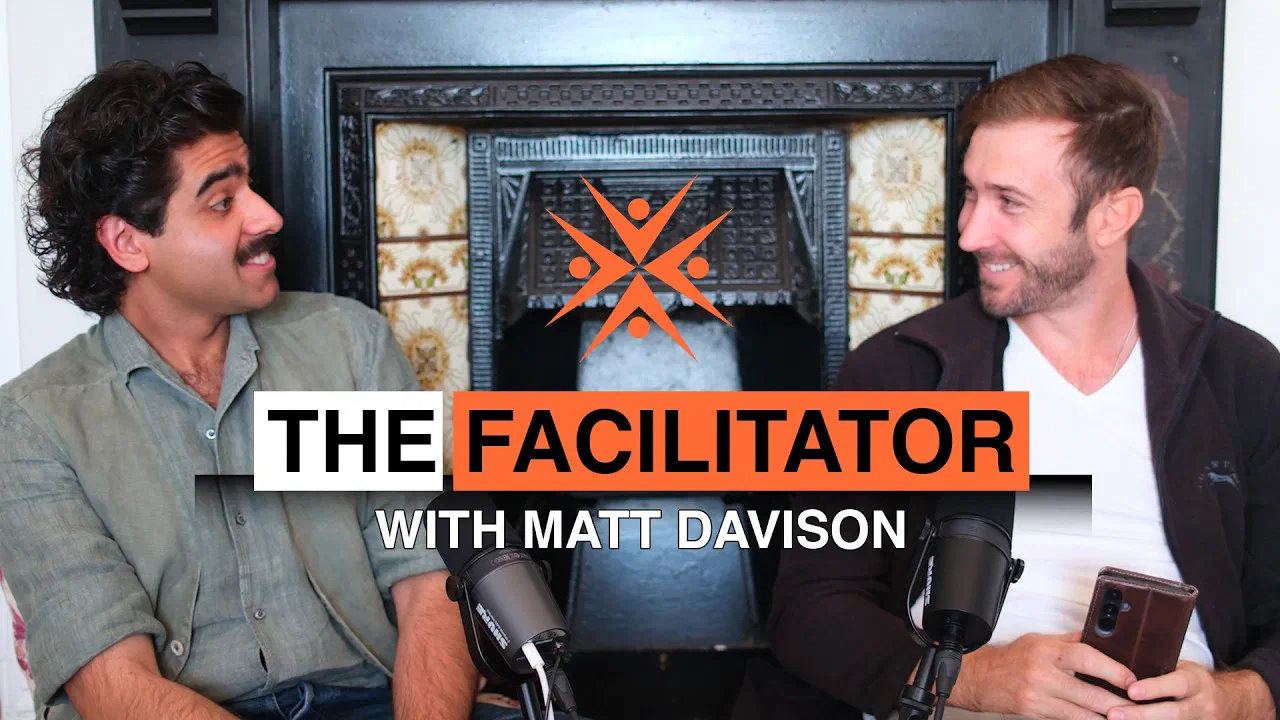
Matt Davison
The Facilitator
· 50 min · Co-Living Founder & SEO Specialist · Based: Cape Town, South Africa
About Matt’s Work #
Matt Davison is the founder of Cape Co-Living (@cape_coliving) in Cape Town, South Africa, which he runs with his partner Dakota. He spent fifteen years as a digital nomad working in travel marketing and SEO before coming home to build it. The house has been open two and a half years, and it’s definitely one of my favourite co-livings — one I’ve been to twice, and would return to again.
Episode Description #
Matt Davison left South Africa because of its tainted past and spent fifteen years travelling the world trying to find somewhere else to call home. He found the answer in a co-living in Palma de Mallorca — not a place, but an idea — and then came back to Cape Town and realised the place had been there all along. It took him another year to find the right house. Two and a half years later, Cape Co-Living is a home rather than a business, and he calls himself a community facilitator rather than a host.
This conversation isn’t about the business model. It’s about the memories. The dance party he came home to at eleven at night. Three hundred dolphins breaching at sunset with champagne in hand. My birthday at Gold Restaurant that felt like stepping into Africa itself. It’s also about the harder things: a guest targeted and robbed, and how the whole house supported him afterwards, because that’s what a community does. The stark inequality of Cape Town, and the honest conversations Matt has with guests before they arrive. And even my learnings from seeing a hungry man on the street, and the guard who subdued him when he wanted my piece of chicken.
Underneath it all is a question about what makes a co-living a co-living. Matt’s answer is that the host has to bring the frameworks — the Monday meeting, the name written next to the plan — and then get out of the way. Facilitate, don’t control. It’s a conversation about coming home, building with intention, and what it means when a house full of strangers starts to feel like family.
Timestamps
- 00:00-01:22Introduction: three months at Cape Coliving, and the end of an era
- 01:22-04:00Why he built a co-living: fifteen years of travel, Palma de Mallorca, and a year finding the house
- 04:00-04:45The craziest thing: the dance party in the lounge
- 04:45-09:34The guest who was robbed: a 7:30am call from Feli, and staying vigilant in South Africa
- 09:34-10:58Booking three co-livings because they all began with C
- 10:58-13:13Not knowing where Africa was: the elephants on the booking page, and Robben Island by accident
- 13:13-14:45Electric fencing, and embracing the mystery
- 14:45-16:43The inequality, where it starts to equalise, and the informal housing on the way in
- 16:43-17:40The question Matt asks every applicant before they come
- 17:40-20:18The man who wanted the chicken, the guard who stopped him, and a normal Tuesday
- 20:18-22:26Whether to give: the sandwich, the night shelters, and the harder right answer
- 22:26-25:14Wisdom teeth, painkillers, and seeing homeless people differently
- 25:14-26:58Highlight one: the Cape Peninsula in winter light
- 26:58-28:27Highlight two: the birthday at Gold Restaurant
- 28:27-29:43Highlight three: three hundred dolphins at sunset
- 29:43-32:58The groups that make the experience, the surprise guest, and an incredible winter
- 32:58-35:53Last year's highlight: a golden hippo on the Garden Route, and why Matt sends guests away
- 35:53-37:00Spring flowers on the West Coast, and prices outside Cape Town
- 37:00-38:25The best food: the steak at Twelve Apostles, and the Durbanville wineries
- 38:25-39:23Matt has never hiked Table Mountain
- 39:23-41:51One suitcase, a handpan stuffed with clothes, and the speaker
- 41:51-43:00Playing handpan on the roof, and the neighbourhood chat
- 43:00-45:43Burgas next: the co-living as playground, and why people make the place
- 45:43-46:56Co-living as a host-led experience
- 46:56-49:20The Monday meeting, and facilitating without controlling
- 49:20-49:58Goodbyes, and weaving colourful carpets
Guest reflection
The Man Who Came Home to Build Community
I arrived at Cape Co-Living nearly three months ago and I’ll be saying goodbye soon. But not before I could sit down with the owner, Matt, and talk about his story.
These past months have somehow both stretched and compressed into a blur of dolphins, dance parties, sunsets over Table Mountain, endless braais and meeting some incredible people. Matt, the founder of Cape Co-Living, has made me feel like family from day one — back in 2025, too, because this is my second time here. And that’s precisely what this place is: not a business, but a home. A space where people come to find community, and in finding community, find themselves.
Going from one amazing co-living at Chateau to one on the other side of the world, nearly 6,000 miles apart, and the similarities are colossal. Both were excellent co-livings. One was based in the French countryside with only horses and cows around, and the other in Cape Town, a bustling urban metropolis. Matt, of course, chose the urban metropolis.
Coming Home #
Matt was born in South Africa. He loved his home, but with South Africa’s tainted past, he wanted to leave and see what else the world had to offer. He left for fifteen years and travelled all over. Met amazing people, stayed in some great places and also some questionable ones. He lived the digital nomad life and loved the freedom of it. But there was one thing that wasn’t always available to him: community.
This life can be quite isolating, especially if you don’t stay with community or get to meet like-minded people.
He’d always wanted to open a co-living. The problem was where. For years that question hung unanswered — and then, after all those years of searching for somewhere else to call home, he came back to Cape Town with different eyes. Fresh eyes. Eyes that had seen the world and realised what they’d been missing all along.
The answer was here the whole time.
Building with Dakota #
Finding the right space took a year. Not because there wasn’t property available, but because Matt understood something fundamental: the space has to earn its place in the community. It can’t just exist. It has to belong. When everything aligned, Cape Co-Living was born — two and a half years ago now.
And he didn’t do it alone. His partner Dakota is the community manager, the person who runs this place alongside him, day in and day out. When he talks about her there’s genuine gratitude. Not the polite kind. The real kind, the kind that comes from knowing you’re lucky.
What Matt has built isn’t a business in the traditional sense. It’s a vision. And visions require partners who understand them, who live them, who wake up every morning committed to the same thing you are. Dakota does that.
What Makes a Co-Living a Co-Living #
Here’s what I’ve learned staying at Cape: a co-living isn’t defined by its address or its amenities. It’s defined by intention.
There are plenty of places with communal kitchens and shared spaces. Most of them are just co-housing — pretty apartments next to other pretty apartments, where people happen to live near each other. That’s not a co-living. A co-living is a host-led experience. Someone has to care enough to design it. To think about it. To make decisions that prioritise community over convenience.
At Cape, that shows up in specific ways. Every Monday there’s a meeting. Everyone gathers, and everyone shares their intentions for the week — what they want to do, where they want to go, what they want to experience. It sounds simple. It’s transformative, because suddenly you’re not a guest in isolation. You’re part of something.
There are community facilitators too, people like Ryon, the hiking guide, who isn’t just a guest but someone who actively creates experiences for others. The host doesn’t try to do everything himself. He builds a framework where other people can contribute, can lead, can belong.
Matt and Dakota facilitate. They don’t control. There’s a crucial difference. If they didn’t think intentionally about community, if they didn’t plan for connection, if they didn’t care whether guests felt like they belonged, this would just be a nice house with nice rooms. Instead it’s a home. A real one.
The Reality of Cape Town #
Cape Town is stunning. Table Mountain. The beaches. The wine country. The energy. The light.
My highlights from this stay tell that story: two or three hundred dolphins leaping at sunset while we sipped champagne on a catamaran. A birthday party at Gold Restaurant that felt like stepping into Africa itself — drums, dancing, storytelling, the kitchen staff pulled into the sheer joy of the moment. The trip out to the Cape Peninsula on a day when the winter light was so clean that everything glowed.
But Cape Town also has a reality that visitors need to understand. There’s inequality here, stark inequality. Security concerns are real. There are informal settlements visible from the airport. The contrast between wealthy neighbourhoods and struggling communities is jarring.
Matt is honest about this. He has to be, because guests need to arrive with open eyes — prepared not just for the beauty but for the complexity. This place, like everywhere, has shadows alongside its light. Understanding the shadows doesn’t diminish the light. It just makes it real.
Leaving #
My time here is ending. Soon I’ll pack my things and move on to the next destination, the next co-living, the next chapter. But leaving Cape Co-Living feels different to leaving other places. There’s a genuine sadness to it — not nostalgia, something more present than that. The sadness of leaving people who’ve become friends. Of leaving a space that genuinely felt like home.
Matt has built something rare. In an industry increasingly focused on scaling, on expansion, on growth, he’s chosen something different. He’s chosen depth. Quality. Community. He’s chosen to create a place where people come not just to stay, but to belong.
That’s the real story of Cape Co-Living. Not the location, though it is beautiful. Not the space, though it is that too. It’s the man who left his home for fifteen years, who travelled the world searching for something, and who found it not in a place but in an idea: that community matters. That the intentional gathering of humans matters. That creating space for connection is worth doing.
And he came home to build it.